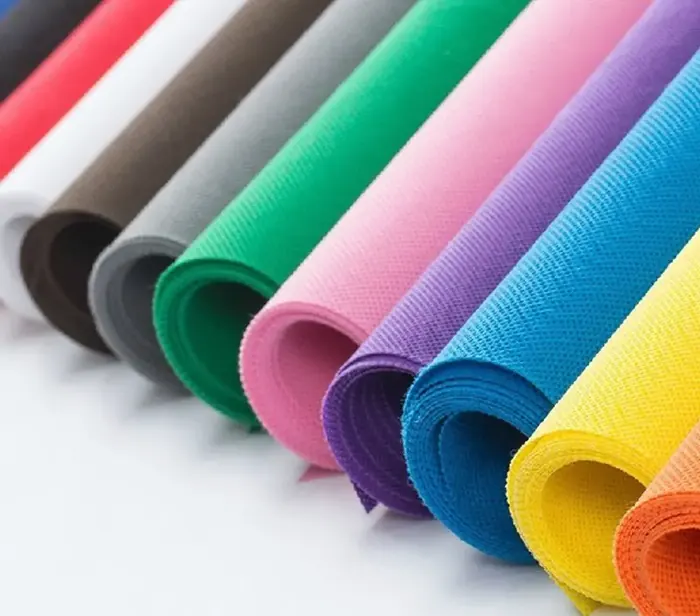
PET Non Woven Fabric Roll (Polyester Spunbond)
PET spunbond nonwoven rolls, 9-240gsm, with heat resistance and dimensional stability for filtration, geotextiles, reinforcement and automotive interiors. GRS-certified rPET options and custom specs available.
Get a Quote Now
Phone: +86-13951449666 | WhatsApp: +86-17372726856 | Email: [email protected]
Technical Specifications
Huayue inspects every batch; actual data per the lab report shipped with each batch.
| Item | Specification |
|---|---|
| GSM Range | 9 - 240 gsm (customizable) |
| Max Width | 3.2 m |
| Heat Resistance | Polyester melts near 260°C — higher short-term heat resistance than PP |
| Roll Dia. / Length | Custom by GSM & width; slitting available |
| Recycled Option | GRS-certified rPET, 30%-100% recycled content |
| Certification | GRS / ISO 9001 / BSCI |
| Colors | Stock colors; Pantone custom to ΔE≤1.5 |
Typical Applications
Heat-resistant and dimensionally stable — built for filtration and industrial reinforcement.
Filtration
Air and liquid filter media, bag support layers
Geotextile
Geotextile, drainage board, subgrade reinforcement
Automotive
Interior lining, acoustic layer, boot trim
Industrial
Composite substrate, membrane reinforcement
Customization in 4 Steps
From requirement to delivery, a dedicated manager follows up throughout.
Requirement
Confirm GSM, width, color, printing and quantity; reply within 24h
Sampling
Free A4 swatch; custom samples in 5-7 days — confirm before ordering
Production
11 lines, online GSM monitoring, standard lead time 10-15 days
QC & Delivery
Final QC + test report, sea/air freight to 30+ countries
Product FAQ
Quick answers on MOQ, sampling and lead time.
Standard stock starts from 0.5 ton; custom colors from 1 ton. Special specs are negotiable.
Yes. Free A4 swatches are provided for texture & color confirmation; custom samples typically take 5-7 days.
We export to 30+ countries with FOB/CIF/DDP terms, and can arrange sea freight, air freight and customs clearance.
A PET nonwoven roll is a continuous fabric spun from polyester chips and bonded in one step, with no spinning or weaving involved. Compared with PP it has a higher melting point (around 255°C), better dimensional stability and stronger ageing resistance, which is why industrial applications with heat and durability requirements specify PET.
PET melts at about 255°C, tolerates short-term processing exposure of 150-180°C (thermal lamination, oven drying) and is normally specified for continuous service below 120°C. For higher duty, ask us about hydrolysis-resistant grades or alternative substrates — send us the working temperature and duration and we will help you select.
Available GSM runs from 9-240, with widths up to 3.2 m and narrow slitting available. Roll length and diameter are set by GSM and your line handling limits so a single roll stays within your lifting capacity.
Judge on three axes. Heat: PET melts at about 250-260 °C with a service temperature up to roughly 150 °C, while PP melts at 160-165 °C and is limited to about 90-100 °C — anything above 100 °C has to be PET. Strength and stability: geotextiles, filtration media, automotive interiors and laminating base favour PET, while PP is softer with better elongation and suits skin-contact and disposable goods. Cost: PP is cheaper per kg and wins on high-volume disposables. The comparison table on this page lines up 12 properties side by side; send us your application, process temperature and target service life and we will recommend a grade with free samples.
Yes. We hold GRS certification and supply recycled polyester (RPET) spunbond rolls with 30%-100% recycled content, backed by transaction certificates per batch. Recycled grades differ slightly from virgin in colour and strength, so we sample first — a good fit for brands with sustainability targets.
Typical uses include air and liquid filtration media, geotextiles and drainage boards, roofing membrane reinforcement, cable wrapping, automotive interiors and acoustic layers, industrial reinforcement and composite substrates. Because GSM, tensile strength and elongation differ widely by use, we customise the spec to your end application.
PET rolls have low moisture uptake and hold their shape under normal warehouse conditions. Store them cool and dry, out of prolonged direct sunlight, flat or racked without heavy point loads. For export we pack in PE film plus woven bag, or palletise and stretch-wrap to your specification; desiccant is recommended for sea freight.
The feedstock is post-consumer PET bottle flakes (water and beverage bottles) sorted, washed, shredded, pelletised and dried before entering the spunbond line. Three documents prove the recycled claim: the GRS (Global Recycled Standard) certificate, a per-batch transaction certificate (TC), and a traceability chain from bottle-flake supplier to finished roll — all of which we can provide per order.
We provide the GRS certificate plus a transaction certificate (TC) for the matching batch, stating the recycled content ratio. These are accepted for brand sustainability audits, retailer compliance checks and packaging/plastics-related regulatory evidence. If you need third-party lab reports or a specific declaration format, tell us before the order is placed.
In tensile strength, heat resistance and dimensional stability, rPET non-woven is close to virgin polyester — enough for mainstream filtration, geotextile, automotive interior and packaging applications. The difference shows up mainly in shade: recycled feedstock varies slightly depending on bottle-flake origin, so we sample first and then move to bulk. Colours can still be dope-dyed to order with ΔE within 1.5.
Heat-Resistant, High-Strength Substrate for Industry
Polyester non-woven with GRS-certified RPET recycled options.
PET non-woven fabric is spun from polyester filament, offering outstanding heat resistance, abrasion resistance and dimensional stability for demanding environments. Huayue PET rolls are widely used in filtration media, geotextiles, drainage boards, industrial reinforcement and automotive interiors, with GSM, width and roll length customized per application.
For sustainable sourcing, we supply GRS-certified recycled polyester (RPET) with 30%-100% recycled content. Combined with our dope-dyeing process, colors can be matched to Pantone cards with ΔE≤1.5. Full traceability from raw material to finished roll helps brands pass green trade barrier audits.
PET vs PP Non Woven Fabric: How to Choose
Same spunbond process, different polymer — the gap in heat resistance, strength, weatherability and cost is a whole order of magnitude.
The question buyers ask most often is simple: should this application run on polyester or polypropylene? Both are spunbond nonwovens and they look and feel similar, but the polymer sets the limits. PET melts at roughly 250-260 °C against 160-165 °C for PP; PET delivers higher tensile strength and initial modulus with a crisper hand, while PP is softer and cheaper. The table below lines up the deciding properties so you can choose against your service temperature, outdoor exposure, strength requirement and budget in one pass.
| Property | Polyester (PET) Non Woven | Polypropylene (PP) Non Woven |
|---|---|---|
| Polymer | PET (polyethylene terephthalate); rPET from recycled bottle flakes available | PP (polypropylene); recycled grades available |
| Melting point | About 250-260 °C | About 160-165 °C |
| Max service temp | Up to roughly 150 °C — suits hot-air and hot-oil filtration | About 90-100 °C — softens above 100 °C |
| Tensile strength | Higher strength and initial modulus; good dimensional stability | Lower strength, but tougher with better elongation |
| Density | 1.38 g/cm3 — heavier at the same thickness | 0.90 g/cm3 — the lightest common nonwoven polymer |
| Hand-feel & drape | Crisper, stiffer, more paper-like | Softer, better drape, closer to a textile feel |
| UV / weathering | Good UV and oxidation resistance — viable for long-life outdoor use | Degrades under UV unless a UV masterbatch or HALS is added |
| Chemical resistance | Resists most acids and solvents; hydrolyses in strong alkali at high temperature | Excellent against acids and alkalis; poor against hydrocarbons and chlorinated solvents |
| Moisture regain | About 0.4% — dimensionally stable, low water carry-over in filtration | Under 0.05% — essentially non-hygroscopic |
| Recyclability | Mature bottle-to-fibre stream; GRS-certified rPET at 30-100% recycled content | Recyclable in the PP stream; food-contact grades widely available |
| Relative cost | Higher per kg; rPET narrows the gap | Lower per kg — best cost-to-performance at volume |
| Typical applications | Filtration media, geotextiles, automotive interiors, electrical insulation, laminating base, artificial flowers, shoe uppers | Masks and hygiene products, shopping bags and packaging, furniture lining, agricultural cover, weed-control fabric |
The one-line rule: if it runs hot (above 100 °C), stays outdoors for years, or needs stiffness and strength — filtration media, geotextiles, automotive interiors, laminating base — choose polyester (PET). If it is disposable, skin-contact or cost-driven — masks, hygiene products, shopping bags, furniture lining, agricultural cover — choose PP. We run both polymers on our own spunbond lines, with GRS-certified rPET from 30% to 100% recycled content (transaction certificate per batch) on the polyester side. Send us your application, GSM and temperature requirement and we will ship free comparison samples before you commit.
Recycled rPET Non-woven Fabric: From Bottle to Roll
GRS-certified, 30%-100% recycled content, with a transaction certificate per batch.
One question comes up in almost every polyester enquiry: can your non-woven be made from recycled material? Yes — and it has been our fastest-growing requirement over the past two years. rPET non-woven starts as post-consumer PET bottle flakes, which are sorted, washed, shredded, pelletised and dried before entering the spunbond line along the same process route as virgin polyester. For brands, that means the polyester content in packaging, shopping bags, automotive interiors or filtration media can count toward recycled-material targets; for European buyers it is also standard practice for packaging and plastics-related compliance and retailer sustainability audits.
Our recycled polyester rolls are certified to the Global Recycled Standard (GRS), available at 30%, 50% and 100% recycled content, with a transaction certificate (TC) issued per batch so brands and third-party auditors can verify the claim. The chain is fully traceable from bottle-flake supplier to finished roll. On performance, rPET non-woven matches virgin polyester closely in tensile strength and heat resistance, covering mainstream uses such as filtration, geotextiles, automotive interiors and packaging. Dope-dyed custom colours remain available with colour difference within ΔE 1.5. One caveat worth knowing: recycled feedstock can shift shade slightly depending on bottle-flake origin, so we sample first and then move to bulk.
- Recycled content options — 30% / 50% / 100%, matched to your application and budget.
- Certification & documents — GRS certificate plus a per-batch transaction certificate (TC) for brand audits and retailer compliance checks.
- Performance & colour — Tensile strength and heat resistance close to virgin polyester; dope-dyed custom colours within ΔE 1.5.
- Typical applications — Packaging and shopping bags, automotive interiors, filtration media, geotextiles and drainage boards, industrial composites.
High-Temperature PET Non Woven Roll: Where PP Stops Working
Continuous service temperature, shrinkage and the GSM bands that hold up in hot-air filtration and industrial laminating.
Polypropylene spunbond covers most bag, packaging and interlining work, but it has a ceiling. PP softens around 150-160 °C and is not recommended for continuous service much above 100 °C. Polyester spunbond sits higher: melting point near 255 °C, with practical continuous service in roughly the 130-150 °C band depending on grade and applied load. Where a roll passes through a hot-air dryer, runs over a heated laminating drum, or sits close to a heat source inside an automotive part, that gap decides whether the web holds its dimensions or shrinks away from the edge.
Three properties matter more than the headline melting point. Dimensional stability under tension decides whether the web tracks straight through a hot oven. Shrinkage at temperature decides whether a finished part stays in tolerance. Tensile retention after heat ageing decides whether a filter still holds its pleats after a few hundred hours in service. Because these move independently, the honest way to specify a high-temperature roll is to state the continuous operating temperature, the dwell time at that temperature, and any tension the web carries — a peak figure alone will get you a cheaper roll that fails quietly in month three. GSM follows the application: filtration media generally sit at 30-120 gsm, laminating and coating bases at 60-150 gsm, automotive trim and reinforcement at 100-240 gsm. Below 100 °C continuous, PP stays the cheaper and softer choice; moving to polyester only pays where heat or dimensional stability genuinely demands it.
- Continuous, not peak, temperature — A 255 °C melting point is not a 255 °C service rating — specify the continuous temperature and dwell time you actually run.
- Shrinkage and dimensional stability — Heat-set polyester holds dimensions through hot ovens; state the maximum shrinkage you can tolerate and the roll gets specified, not guessed.
- GSM by application — Filtration 30-120 gsm, laminating base 60-150 gsm, automotive 100-240 gsm — pick the band first, then the temperature grade.
- Knowing when PP is enough — Under 100 °C continuous, PP is cheaper and softer; switch to polyester only where heat demands it.
Related Products
Same factory, combination orders and matching customization supported.
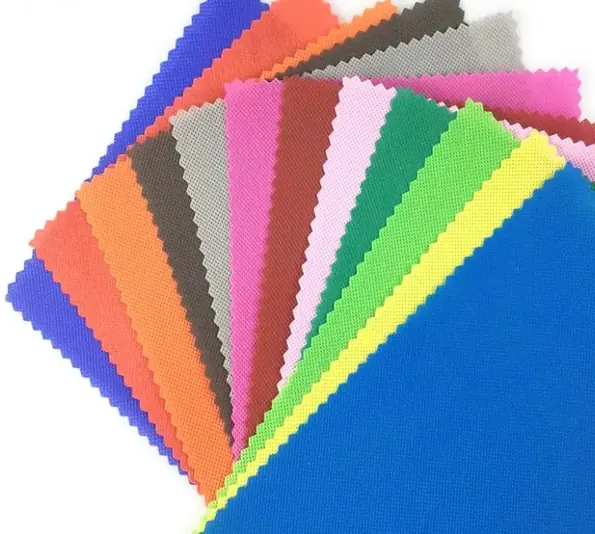
PP Non Woven Roll (Spunbond Fabric)
PP spunbond nonwoven fabric rolls made from 100% polypropy...
View Details →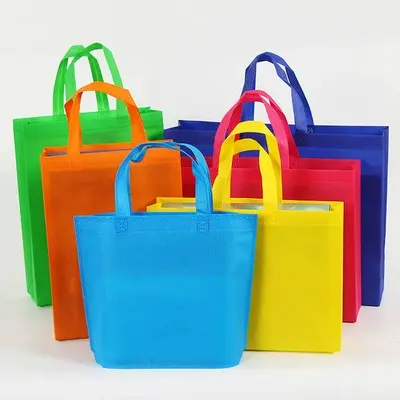
Custom Non Woven Bags (Shopping & Promotional)
Premium PP non woven bags and reusable shopping totes. Sup...
View Details →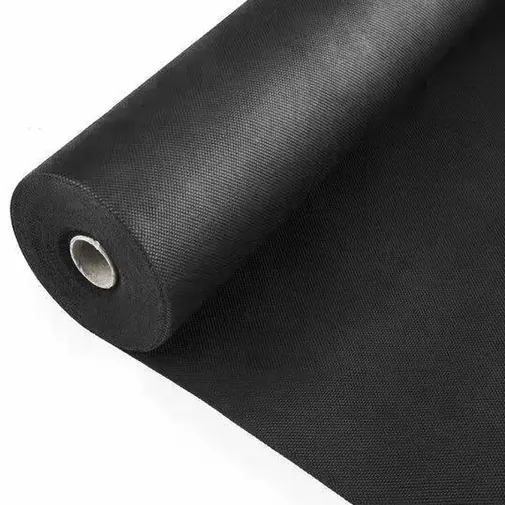
Non Woven Weed Control Fabric
Heavy-duty PP non woven weed control fabric, 60-200gsm, wi...
View Details →Related Reading
Guides and buying tips from our factory floor