rPET Airline Headrest Covers: A Buyer's Guide
Specification, recycled-content verification, cost drivers and the enquiry checklist — for airline and amenity buyers
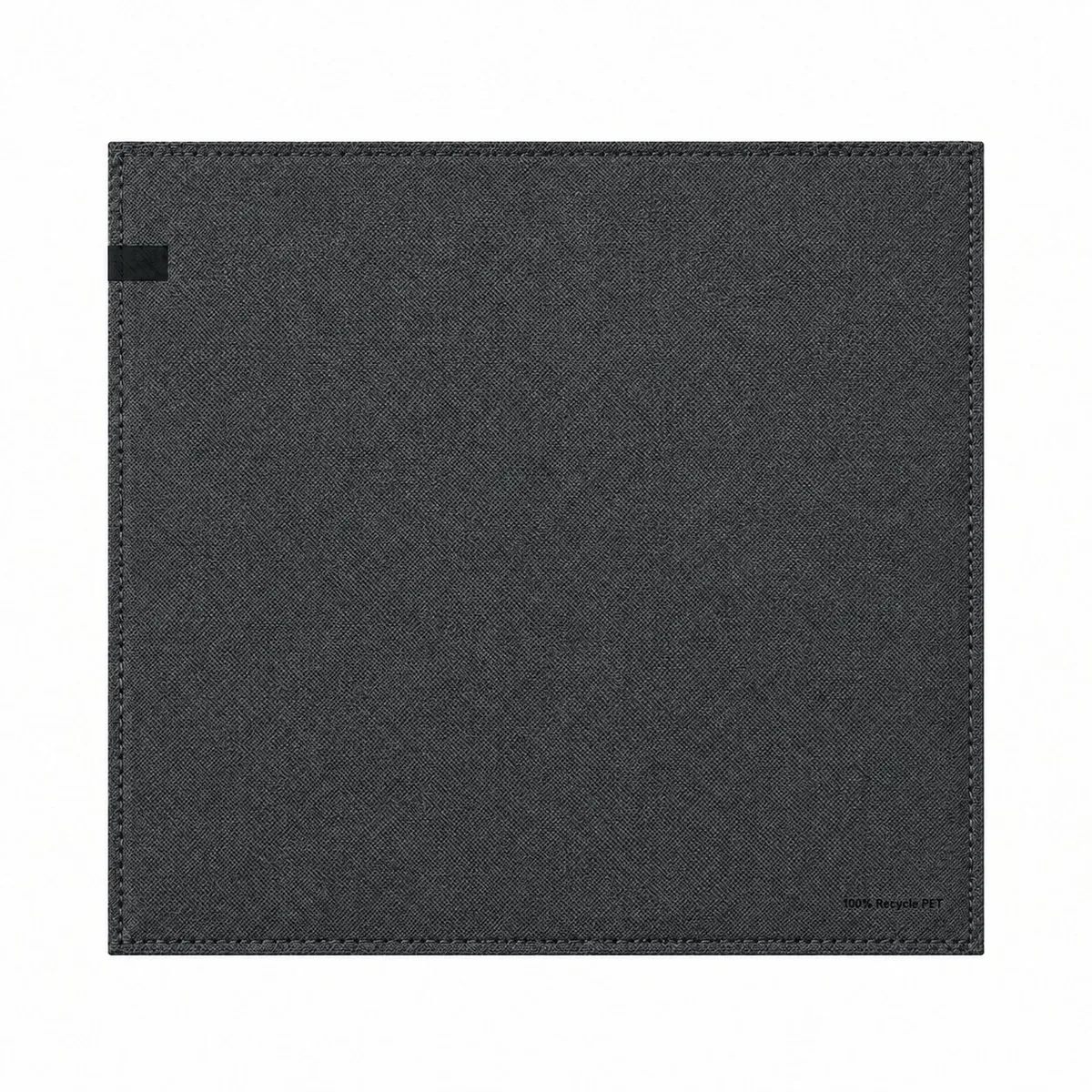
A disposable airline headrest cover is a nonwoven sleeve that slips over the seat headrest and is changed for every passenger, replacing the fabric cover that has to be removed, laundered and refitted. For airlines and amenity buyers it is not a comfort purchase — it is a turnaround purchase: a whole cabin can be changed in minutes and the seat never leaves service.
This page is not a specification sheet (that lives on the rPET airline headrest cover product page). It covers the four things that actually change the outcome of a purchase: how to specify, how to verify the recycled claim, what drives cost, and what to send with an enquiry.
Specification: four variables decide the finished cover
- GSM — typically 30-60. Lower is softer and cheaper; higher is stiffer and more opaque.
- Size — made to your headrest drawing or a used sample; give the slip-on direction and opening position too.
- Fixing — sewn slip-on (relies on fit) or elasticated hem, depending on headrest shape and turnaround speed.
- Finish — whether a water-resistant coating is needed (perspiration) and how many colours the airline logo prints in.
| Item | Typical choice | What it changes |
|---|---|---|
| GSM | 30-60 (amenity programmes usually 35-45) | Hand-feel, opacity, unit cost |
| Material | rPET recycled polyester / PP nonwoven | Environmental claim, TC availability, unit price |
| Size | Made to drawing or used sample | Fit — too tight or too loose makes it unusable |
| Fixing | Sewn slip-on / elastic hem | Turnaround speed, whether it slips |
| Surface | Plain / water-resistant finish | Perspiration resistance, cost |
| 1-4 colour logo | Branding, MOQ and unit price |
Verifying the recycled claim: you need both documents
A single "GRS certificate" is not enough — the two documents in the GRS system do different jobs:
- Scope certificate (SC) — proves this factory and this product category are inside the certification. It says the supplier is qualified; it does not say this shipment used recycled material.
- Transaction certificate (TC) — issued per batch, proving how much recycled material this order actually used. This is the document an ESG report or a supplier questionnaire asks for.
How to check: look up the certificate number through the issuing body or the Textile Exchange system. We ship the TC with each recycled batch. Further reading: how to verify a GRS certificate, rPET from bottle to roll, the three PPWR documents EU buyers require.
What drives cost
- GSM and size — material consumption is the base cost.
- Recycled content and certification — recycled feedstock carries a premium, and the per-batch TC adds certification cost.
- Print colours and coating — each extra process raises both unit price and MOQ.
- Volume and lead time — larger runs spread the setup cost; rush orders affect scheduling and price.
Send all of the above in one message and the quote comes back usable. Asking only "what is the price per piece" gets you a range so wide it has no decision value.
Related pages
- rPET airline headrest cover product page (specification)
- PET recycled polyester nonwoven rolls
- Hotel & airline disposable slippers
- rPET from bottle to roll
FAQ
Typically 30-60 gsm. Lower GSM is softer and cheaper; higher GSM is stiffer and more opaque. Amenity programmes usually sit at 35-45 gsm and move up to 60 when coverage and hand-feel matter more. We confirm the final GSM with a sample before bulk.
Either works: send the headrest drawing (length x width x thickness, opening direction), or post a used cover. We make a trial cover against the physical seat first, so a cover built from numbers alone does not come out too tight or too loose.
At the same GSM, rPET recycled polyester is close to virgin polyester in strength, hand-feel and printability. The real difference is shade: recycled feedstock can shift slightly between batches, so we always sample first and only move to bulk once the recycled base shade matches your brand requirement.
Two: the scope certificate (SC) proves the factory and this product category are inside the certification; the transaction certificate (TC) proves, per batch, how much recycled material was used. Both are checkable through the issuing body or the Textile Exchange system. We ship the TC with each recycled batch.
Yes — a 100% recycled PET specification is available (the sample we photograph is 100% Recycle PET). Recycled content, colour and GSM constrain each other, so tell us the target ratio and application; we confirm it per batch and state it in the contract and the TC.
MOQ depends on GSM, size, number of print colours and whether a water-resistant finish is added — the spread between configurations is wide. Lead time moves with order size and line scheduling. Send volume, destination port and target delivery date and we quote the actual configuration rather than a generic figure.
Get a quote within 24 hours
Send the seat drawing or a used sample, target GSM and recycled content, quantity and destination port.
Send an enquiry Full specification