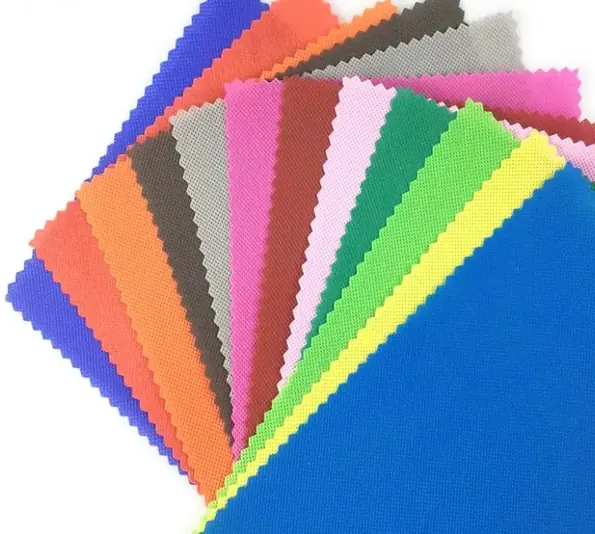
These three processes are not substitutes — they are different tools. Spunbond wins on strength and cost, meltblown on fine-fibre filtration and barrier, spunlace on softness and absorbency. We make spunbond; this guide says plainly when you should buy the others.
Phone: +86-13951449666 | WhatsApp: +86-17372726856 | Email: [email protected]
One paragraph each, without the marketing.
Spunbond: polymer is melted, extruded into continuous filaments, drawn, laid into a web and thermally bonded. Filaments are relatively thick, so the fabric is strong and cheap per square metre, but the pore structure is too open for fine filtration.
Meltblown: the same polymer is extruded through much finer nozzles and hit with hot high-velocity air, producing microfibres (often below 5 µm). That gives very high surface area and fine filtration, but low strength — meltblown is usually laminated onto spunbond rather than used alone.
Spunlace: a carded web is entangled with high-pressure water jets, with no thermal bonding. It is soft, drapes well and absorbs, which is why wipes and hygiene products use it.
The differences that decide the specification.
| Property | Spunbond | Meltblown | Spunlace |
|---|---|---|---|
| Fibre diameter | Relatively coarse | Microfibre (<5 µm typical) | Medium |
| Strength | High | Low (usually laminated) | Medium |
| Filtration | Coarse | Fine | Medium |
| Softness / absorbency | Medium | Low | High |
| Cost per m² | Low | High | Medium-high |
| Typical use | Bags, agriculture, furniture, packaging, medical outer layer | Mask filter layer, filtration media | Wipes, hygiene, medical drapes |
| We produce | Yes (PP / PET) | No | No |
Start from what the product has to do, not from the process name.
| If the product must… | Choose | Why |
|---|---|---|
| Carry load / hold a seam | Spunbond | Continuous filaments give tensile strength |
| Filter fine particles or block droplets | Meltblown (often spunbond + meltblown laminate) | Microfibre pores |
| Be soft and absorbent | Spunlace | Water-entangled, no thermal bond |
| Survive outdoor UV | Spunbond PP + UV masterbatch, or PET | UV-stabilised, thicker web |
| Withstand heat above 100 °C | PET spunbond | Polyester service temperature is higher |
| Reach a low cost per m² at volume | Spunbond | Fastest, cheapest process at scale |
What the process choice does to your order.
Spunbond is the lowest cost of the three per square metre at volume, and our MOQ starts at 0.5 tonne for stock specifications. Meltblown and spunlace are normally bought from specialist converters; if your project needs them, we will say so rather than quote a spunbond substitute that fails the test.
What buyers ask before ordering.
No. Both are made from molten polymer, but meltblown uses hot air to stretch the fibres into microfibres, which gives fine filtration and low strength. Spunbond filaments are much coarser, so it is stronger and cheaper but filters poorly.
No. A typical mask uses spunbond for the outer and inner layers and meltblown for the filter layer. Spunbond alone will not provide the required filtration efficiency.
Spunbond — usually PP at 60-100gsm. It holds a seam, takes print and is the cheapest process at volume.
No. We make PP and PET spunbond only, and we say so when a project needs the other processes.
PP for soft, low-cost, room-temperature products; PET for heat resistance, strength and dimensional stability. See the PP vs PET comparison page for the full table.
Send GSM, width, colour and monthly volume — we reply with a formal quotation within 24 hours.
Request a quoteWhatsApp us